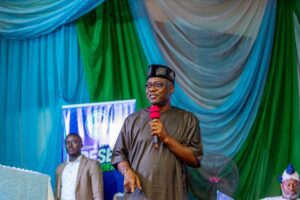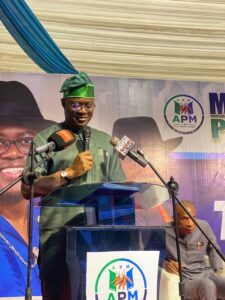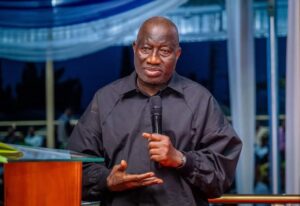

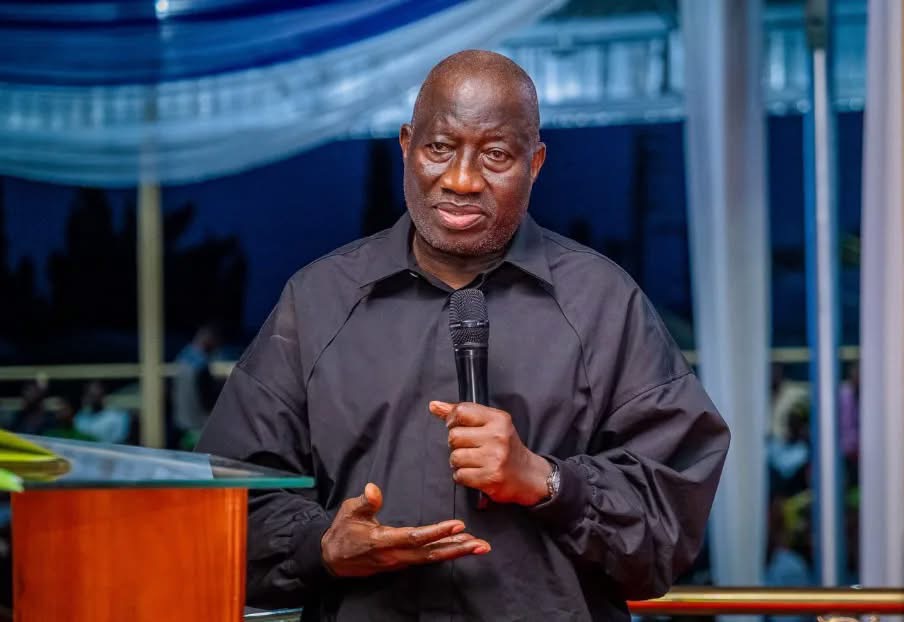
Ex-President Goodluck Jonathan has urged Nigerian politicians to place national interest above party loyalty and sectional considerations, declaring that Nigeria is greater than any political party and politician in the country.
Jonathan also called for national unity, stronger democratic institutions and greater commitment to good governance, saying former deputy governors had a responsibility to deploy their experience to promote national development.
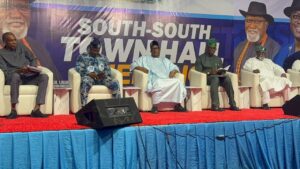
He spoke on Tuesday at the 5th National Conference of the Forum of Former Deputy Governors of Nigeria in Abuja.
The ex-president, represented
He said, “One major obstacle to Nigeria’s political development is division along ethnic, religious and regional lines. We must rise above these differences and promote politics founded on competence, integrity, inclusion and national interest.
“Nigeria must always be greater than any political party, individual or sectional interest.”
Jonathan, who served as deputy governor and governor of Bayelsa State before becoming vice-president and president, said his experience had taught him the importance of consultation, teamwork and strong institutions.
He urged former deputy governors to promote cordial relationships between serving governors and their deputies, mentor younger politicians and discourage divisive politics.
“As a former deputy governor and governor of Bayelsa State before becoming vice president and subsequently president of Nigeria, I understand the opportunities and challenges associated with the office of deputy governor.
“The experience teaches patience, loyalty, consultation and teamwork. Above all, it reminds us that governance is not about one individual but about strong institutions and service to the people,” he stated.
According to him, political office is temporary, but its consequences can shape generations, making it imperative for former public office holders to guide emerging leaders on integrity, accountability and responsible leadership.
He expressed optimism about Nigeria’s future, citing the resilience and creativity of its people, particularly young Nigerians, whom he said needed opportunities to work, innovate and prosper.
*Ganduje, Okowa speak on national unity*
Ex-Akwa Ibom State Governor, Obong Attah, and former Kano State Governor, Dr Abdullahi Ganduje, at the 5th National Conference of the Forum of Former Deputy Governors of Nigeria in Abuja on Tuesday. Photo credit: Adebayo Folorunsho-Francis
In his remarks, former Kano State Governor, Dr Abdullahi Ganduje, urged Nigerians to embrace their diversity and develop a stronger sense of national identity, warning that ethnic politics continued to undermine nation-building.
Ganduje, the immediate past national chairman of the ruling All Progressives Congress, traced Nigeria’s complex national integration challenges to its colonial history but acknowledged the contributions of First Republic politicians to the struggle for independence.
He also criticised the lack of continuity between successive administrations, saying political friction between incumbent governors and their predecessors often led to the abandonment of projects and programmes.
Ganduje said such practices undermined sustainable development, stressing that continuity was necessary for consolidation and long-term progress, among others.
“We must, however, appreciate our First Republic politicians, who developed a sense of nationalism and worked to secure independence. They succeeded in achieving independence through political pressure.
“Unfortunately, after Nigeria’s Independence, some of those leaders who had demonstrated a nationalistic outlook became tribalistic in their attitudes, as political parties were largely organised along ethnic lines.
“It is, therefore, our responsibility, as time progresses, to come together, believe in Nigeria and turn our diversity into an asset rather than a liability,” he said.
Ganduje raised concerns about the strength of democratic institutions, including the judiciary, and questioned how meaningful judicial reform could be achieved.
The former APC chair added that deputy governors should be recognised for their contributions to governance rather than treated as mere substitutes for governors.
He said, “What is the issue between a governor who has left office and a new governor who has taken over? We often find friction between them, sometimes even when they belong to the same political party. The situation can be worse when they belong to different parties.
“This friction denies us continuity in governance. A governor may have completed some projects while others are still ongoing. When a new governor comes into office, the previous administration’s projects and programmes may be abandoned or reversed. There is, therefore, no continuity.”
In his address, former Delta State governor, Ifeanyi Okowa, said the growing disconnect between government policies and citizens’ everyday experiences had weakened public trust.
He said nation-building depended on a social contract anchored on accountability, inclusion and shared responsibility, adding that citizens had increasingly felt alienated because their expectations and aspirations were not being adequately met, among others.