
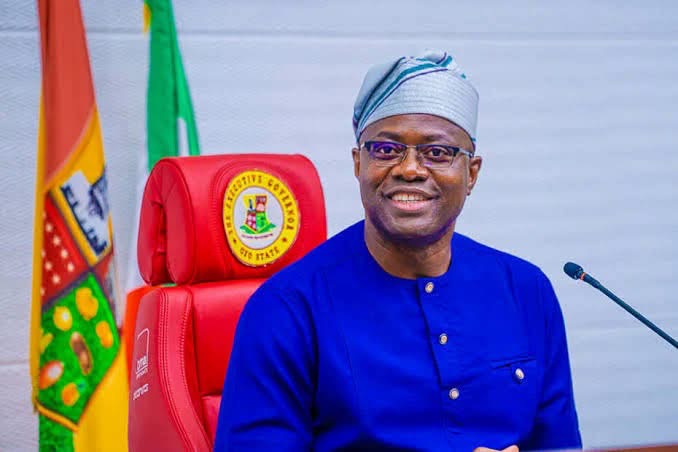
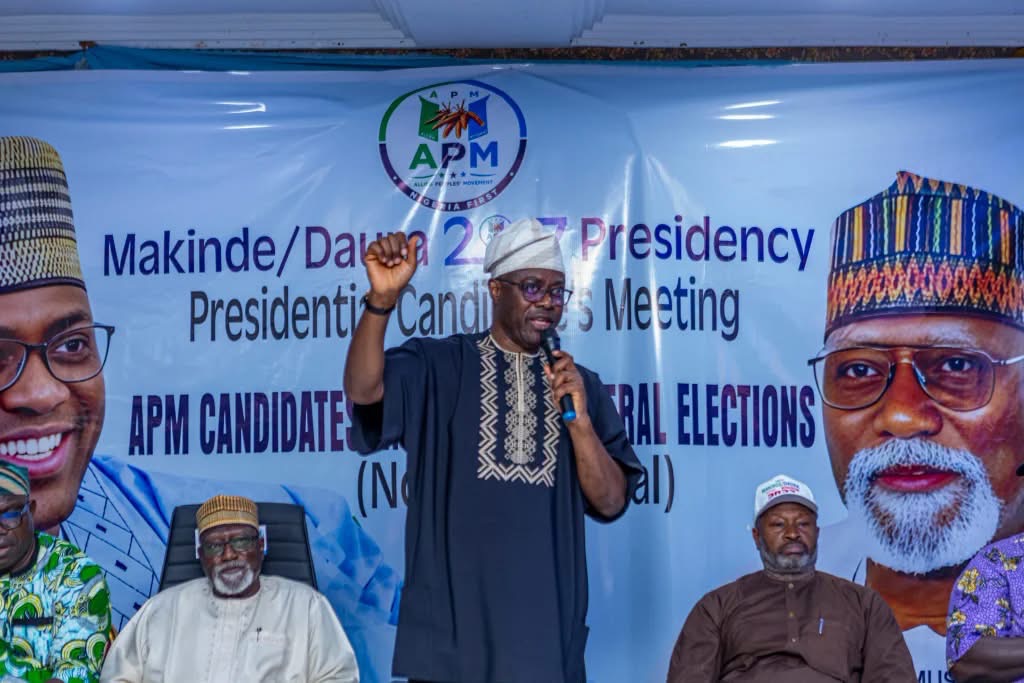
Oyo State Governor and presidential candidate of the Allied Peoples Movement (APM), Seyi Makinde, has said Nigeria can be reset within four years if he is elected president in 2027.
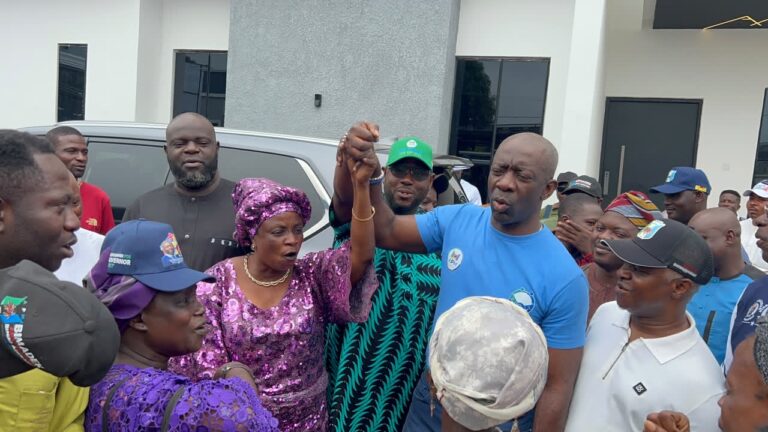
Makinde stated this on Monday at the APM North-Central Town Hall Meeting in Lafia, the Nasarawa State capital.
In an earlier post on X, the governor wrote: “We are presently in Lafia for the APM North Central Town Hall Meeting today. Last night, we held a closed-door meeting with APM candidates in the North Central Zone. We will work together to reset Nigeria so that it works for all Nigerians.”
Speaking at the town hall, Makinde said his administration would introduce a new security architecture, chart a new path for education, and rebuild the economy using data, science and logic.
According to him, the proposed reset would also cover Nigeria’s socio-political environment.
“The reset agenda can be concluded in four years. We had someone who was head of state in this country for 10 months, and he was able to end military rule and usher in the democracy we now enjoy in Nigeria,” he said.
“We can reset and give Nigeria a new security architecture, a new path for education, our economy utilising data, science and logic, and our socio-political environment in four years. So, as your president from May 29, 2027, we will run a transitional government of national unity that will culminate in new players and an agenda for Nigeria’s sustainable development,” Makinde added.
The governor also criticised the Federal Government’s handling of insecurity, particularly in the North-Central region.
He questioned the planning behind the establishment of additional army divisions, noting that he did not see provisions for them in the 2026 federal budget.
“Midway into 2026, insecurity is a big issue, especially in the North-Central zone. They set up army divisions, and I was looking at the 2026 budget. For the item relating to the setting up of those army divisions, I did not see it. If they have it in the budget they prepared for 2026, they should bring it up,” he said.
Makinde stressed that tackling insecurity requires proper planning and adequate budgetary provision.
He further questioned whether increased allocations to states from the federation account had improved living conditions.
“Yes, they claim the state government has more money from the federation account. I’m not arguing that we have more money, but has it translated to fighting hunger in our society? The answer is no,” he said.
On Oyo State’s finances, Makinde said his administration had reduced dependence on federal allocation from over 80 per cent in 2019 to about 65 per cent in 2022, but noted that the removal of fuel subsidy had reversed the gains.
“When I came in as Oyo State governor in 2019, the state’s dependence on federal allocation was 80+ per cent; we worked really hard to bring it down to about 65 per cent in 2022, then came the statement ‘subsidy is gone’… the resultant is that today, Oyo State is back to almost 80 per cent dependent on federal allocation. That is their voodoo economics,” he said.